We believe that sustainability is the feasible and affordable combination of environmental awareness, commercial interests, and CSR, not only for products, but especially for communication with people, employees, and partners as well.
This approach guides us throughout the entire product life cycle, from design and development to production and supply chain processes, packaging and delivery, product longevity (including the use2 programme), and recycling of used materials and components for use in new products that will serve future generations.
Kusch+Co products are synonymous with long life cycles and optimum recyclability.
From the very first sketches of a new product design, we consider environmentally relevant issues at all stages of the product life cycle – from material selection, design and development through production processes, packaging and transport, to withdrawal from service and recycling.
Design
We design for efficient resource management and for product longevity. Our contribution to sustainable development begins at the design stage. We use raw materials by respecting finite natural resources, and work with designers, who appreciate the natural world as much as we do. They strive to minimize the use of materials, make products recyclable, and ensure long product life.
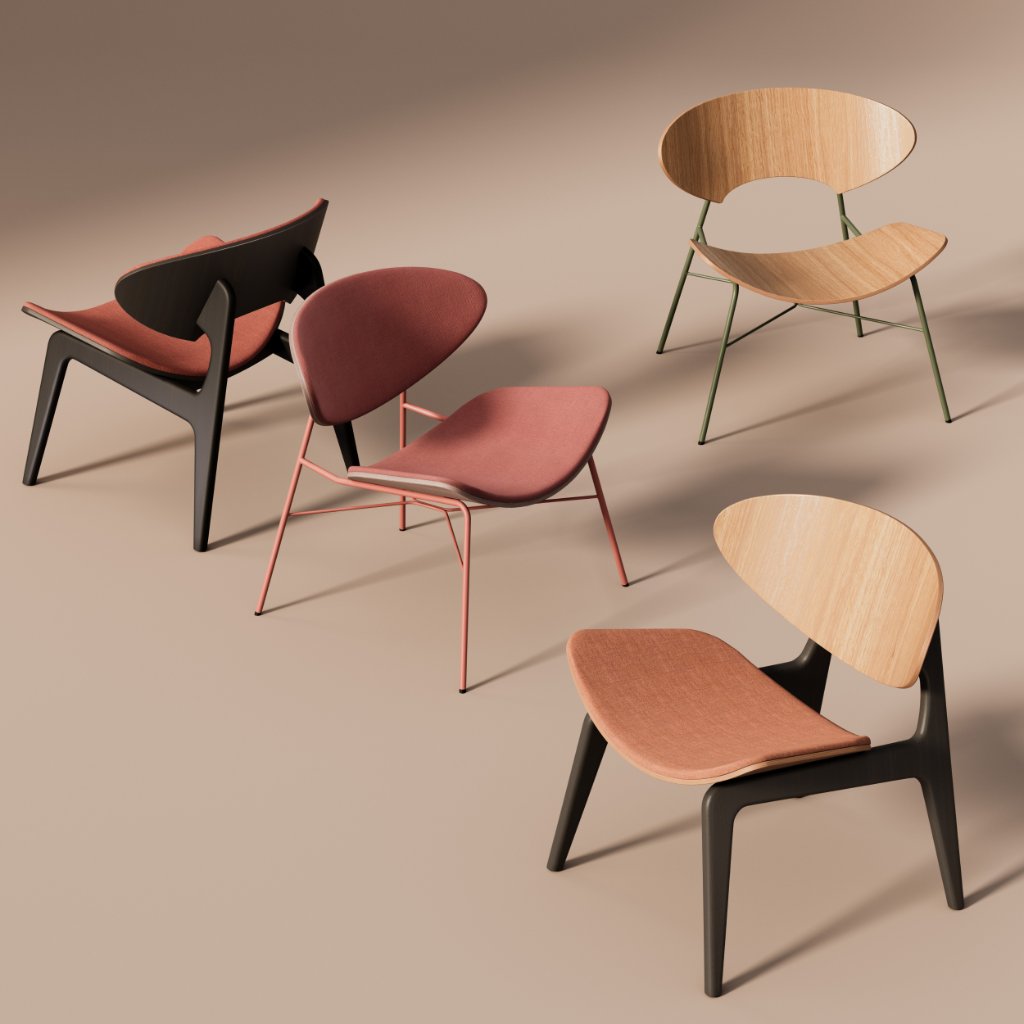
Antonio Scaffidi, the designer of Embla, displays a creativity that is based on a deep understanding of nature, and manifested in his designs.
Design for sustainability means:
Timeless and ergonomic design
Reduction of materials
Durability, including high-quality materials
Modularity, flexibility
Well-thought-out base design
Option of replacing used components
Inclusive design
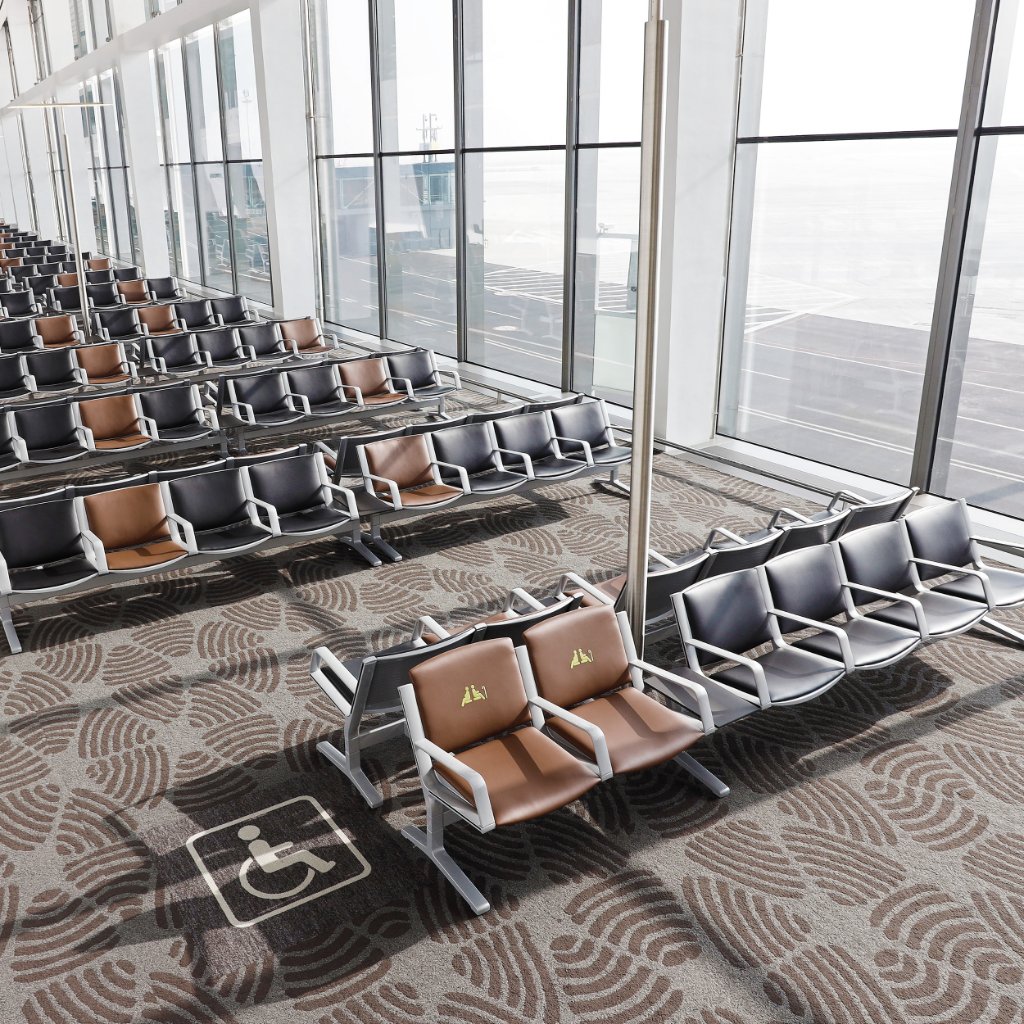
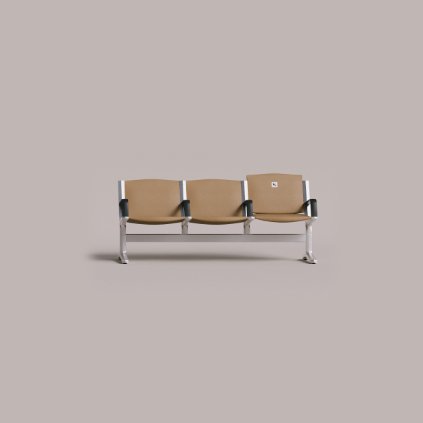
Given our experience in designing solutions for healthcare premises, we understand the needs of persons with reduced mobility well. We keep them in mind when creating each new product. PRM terminal bench seating, higher chairs with stable armrests, extra weight capability - our solutions make all spaces – living, working, travel or entertainment more accessible to senior citizens, pregnant women, persons of short stature, as well as persons with a specific disability.
Inclusive design
Given our experience in designing solutions for healthcare environments, we understand the needs of persons with reduced mobility and consider them in the development of each new product. Our solutions – including PRM terminal seating, higher chairs with stable armrests and increased weight capacity – help make living, working, travel and leisure spaces more accessible.
Seating must fulfil the following requirements for persons with reduced mobility:
Seat height of at least 48 cm
Seat surfaces enabling them to sit upright and to get up more easily
Stable armrests providing good support
The legs should be positioned as vertically as possible, so that they do not become a trip hazard.
Vega by Dieter Kusch
– optional seat height 50 cm
Palato by Kusch+Co Design Team
– optional seat height 50 cm
Scorpii by Uwe Sommerlade
– optional seat height 50 cm
Airport Seating
For passengers with reduced mobility, it is possible to raise the seat height of one or more seats within a bench row / configuration. The stable arms provide extra support, facilitating sitting down or getting up. These benches meet all the requirements of EU Regulation No. 1107/ 2006 which, among other things, regulates the availability of appropriate seating for passengers with reduced mobility.
For passengers with reduced mobility, it is possible to raise the seat height of one or more seats within a bench row / configuration by using spacers:
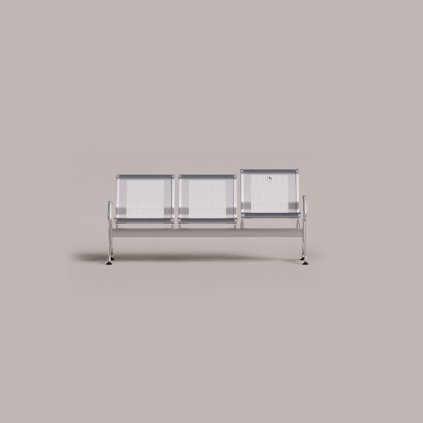
V-Travel Bench by Justus Kolberg
– by 5 cm or more
V-Care Bench by Justus Kolberg
– by 5 cm
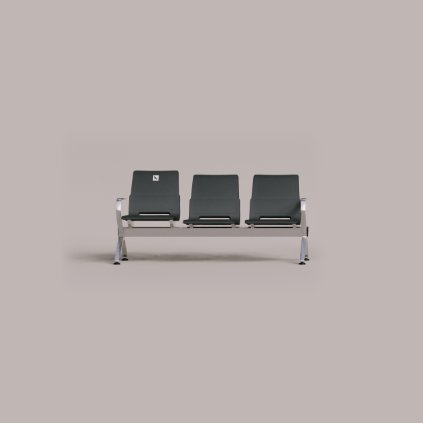
Terminal by Prof. Jorgen Kastholm
– by 5 cm or more
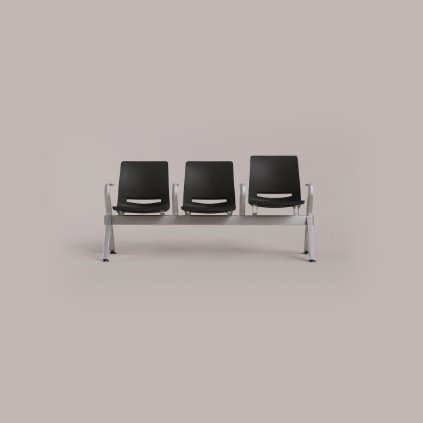
8000 by Studio F.A. Porsche
– by 4 cm
Terminal by Prof. Jorgen Kastholm
– by 5 cm or more
8000 by Studio F.A. Porsche
– by 4 cm
At the same time the seat ergonomics is changed, the seat angle is a 20 mm more upright to make it even easier to stand up and sit down.
Bariatric Seating
Seating adapted to the needs of overweight persons must meet a set of specific requirements to accommodate overweight persons and offer them a comfortable seat.
Bariatric seating
Seating adapted to the needs of overweight persons must meet a set of specific requirements to accommodate overweight persons and offer them a comfortable seat.
The seating:
must be able to support a high weight
has to offer a generous amount of space, especially width
requires a very sturdy construction
should offer custom seat heights, making it easier to get up
The Scorpii armchair featuring open armrests can support body weight up to 200 kg – features a generously sized seat – is available with a seat height of 45 or 50 cm.
Development
This is where design sketches physically take on three dimensions, the lines drawn in pencil transform into those made of wood or other material, and thus the idea turns into a real product. This is where our experts use all their knowledge and experience to make the best of the design and materials for the sake of our planet.
Development for sustainability means:
reducing material usage – to save material, and to reduce weight
production optimisation (for example: one mould can produce 4 foam parts: an outer seat, poufs, and sofas, each in two versions)
component universality and minimal number of components
ability to replace most components
selection of materials with reduced formaldehyde and VOC emissions
Production
Designed and developed with care for our natural environment, the product is ready to be manufactured for end-users, to serve them and elevate their everyday experience over the long term. Kusch+Co's product lines are manufactured with sustainability in mind. Production processes are continually optimized to increase energy and water efficiency, reduce raw material consumption, and reduce waste.
GHG reporting
quality management
environmental management
Decarbonisation
We are aware of the need to reduce CO₂ emissions and make decarbonization one of key strategic goals. Calculation of the carbon footprint for production is conducted in accordance with the requirements specified in ISO 14064-1 and the GHG Protocol. Calculation activities focus on direct and indirect emissions, using the GHG Protocol methodology – Scopes 1 and 2.
Scope 1 – direct emissions from fuel consumption from sources owned or controlled by the organization.
Scope 2 – indirect emissions, primarily from the consumption of electricity generated in off-site installations.
Quality management
To ensure consistently high customer satisfaction and product quality, while also ensuring environmental and safety aspects, production is carried out in accordance with the ISO 9001:2015 quality management system and the ISO 14001:2015 environmental management system.
Paint finishes using water-based varnish
By using water-based varnish, we have reduced emissions of volatile organic compounds to an absolute minimum. The water-based varnish used does not contain any harmful substances.
Finishes
Finishes
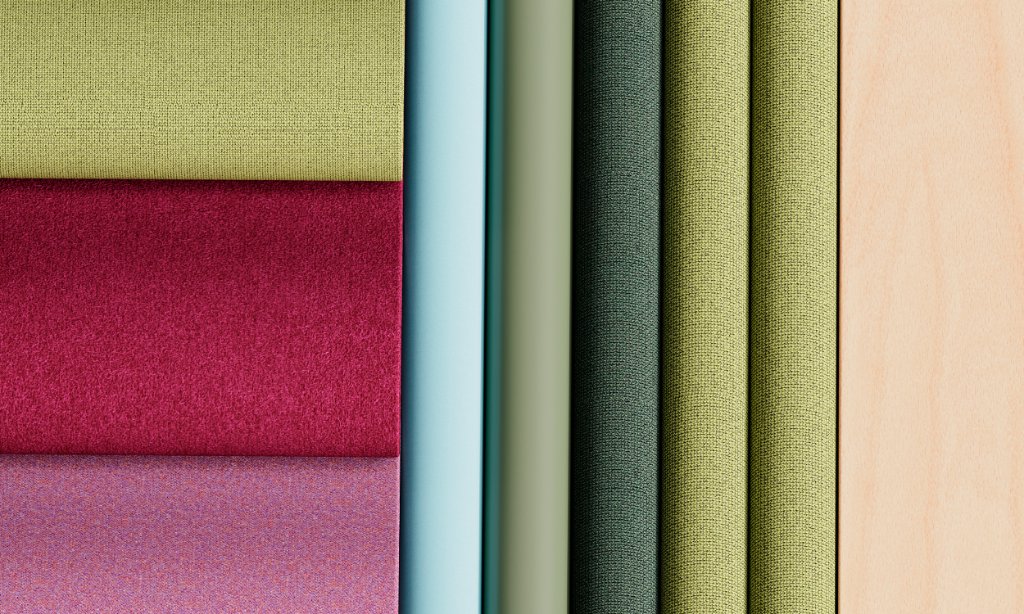
Our selection comprises fabrics sourced from natural renewable sources: wool and flax.
Wool is a natural and renewable material that grows quickly. Woolen textiles, thanks to their high durability and with proper maintenance, age beautifully and contribute to extending the product life cycle.
We select woollen textiles from producers who acting responsibly care for animal welfare, and are certified to the EU Ecolabel. Flax needs minimal water for cultivation, and during growth, each hectare of flax absorbs 3.7 tonnes of CO₂. Source: Camira manufacturer's website.
Kanu lounge armchair by Tomasz Augustyniak, upholstered in Remix 3 by Kvadrat (90% of wool)
3. Packaging & delivery
Packaging
Packaging materials are reusable, and we really do use them multiple times. Our packaging materials are recyclable, and are for the most part made of recycled mixed materials. We take packaging materials back and reuse them several times, before they are fed into the recycling cycle.
Delivery
Our logistics operators have provided our company with long-term strategies concerning sustainable development reports (including reduction of greenhouse gas emissions) which represent targeted plans for achieving certain objectives.
4. Longevity & use2
The longevity of the product is influenced by various factors, including timeless and ergonomic design, which makes the product look fresh and modern; durability, as a result of which the product provides comfort over a long period of use; and the ability to replace most components.
¡Hola! chair by Jorge Pensi
The designers, who create for Kusch+Co aim to achieve all the above in every piece of furniture they introduce to the market. Our products are also subjected to stability, strength, and durability tests.
¡Hola! chair, designed in 1996 by Jorge Pensi, still impresses with its timeless design – it was great yesterday, it is an excellent choice today and will easily fit into the spaces of tomorrow.
Creva Soft Seating by design studio kaschkasch is guaranteed to have a long service life, with most components being replaceable and retrofittable.
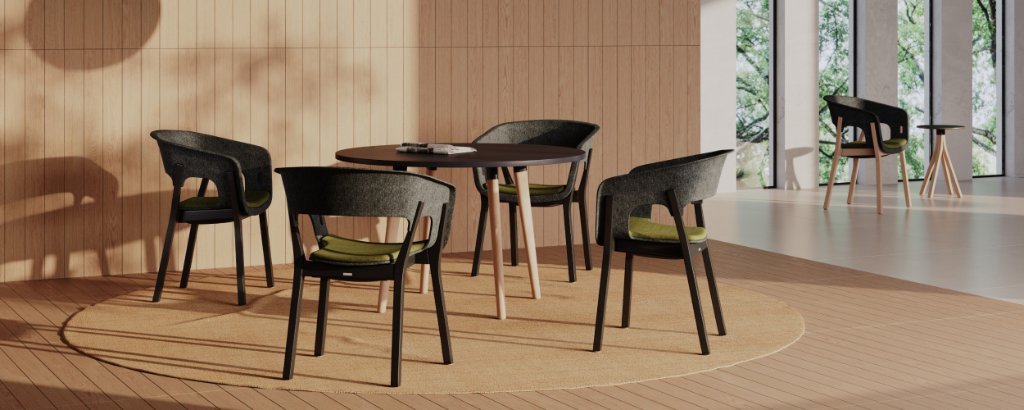
In Njord, designed by Antonio Scaffidi and Mads K. Johansen, solid wood meets felt – these two materials can be separated up to 90% to be later recycled and reused.
As a man is in the centre of the brand’s interest, Kusch+Co wants to give him the quality, that can truly support his dynamic work- and lifestyle, his daily routines and the environment he lives in. Being aware of how the connection with nature influences human well-being, we at Kusch+Co we focus on bringing out the natural beauty of raw materials, like wood, in our products.
Embla beautifully highlights the natural material and gives the user the satisfaction of communing with nature.
5. Recycling
Our products contain a high proportion of renewable raw materials, materials that can be separated by type and are easy to recycle.
Plastic
We use easily recyclable components made from polypropylene, polyethylene and polyamide as separable components and label them to facilitate the separation of materials in the end-of-life/recycling stage.
Metal
Metal is a raw material that already contains recycled content and is easily recycled at the end of the product's life cycle.
Aluminium
We use almost exclusively recycled and recyclable aluminium.
Wood
All wood and wood-based materials used in our products come from legal sources, and most of them come from areas with sustainable forest management, as confirmed by the following certificate: FSC® (FSC®-C155352). This ensures that these materials do not come from wasteful logging and deforestation.
Textiles
To minimize waste and move within the circular economy, we use textiles made of post-consumer recycled polyester, that additionally is recyclable. Most of the post-consumer recycled polyester textiles we offer are certified with the EU Ecolabel and STANDARD 100 by OEKO-TEX®, which guarantees that the product does not contain harmful substances.
All waste generated in our production processes (e.g., fabric scraps, foam scraps, metal scraps, fabric scraps, paint scraps) is sorted on-site, then collected and processed by authorized companies, and almost all of it is recycled. Waste accumulated during the processing of wood materials and wood components is used as biomass for thermal energy production.
Kusch+Co as a part of Nowy Styl
Kusch+Co belongs to Nowy Styl – one of the largest producers of office & public spaces furniture in Europe. It is in Nowy Styl’s social responsibility to comply with ethical standards protecting human rights and fair business inside our organisation and all along our value chain.
Sustainable development documents
We apply specific internal and external policies to ensure this, including: Code of Ethics, Supplier Code of Conduct and Procurement Policy, which extend the standards of ethics and social, economic, and environmental responsibility for Nowy Styl suppliers.
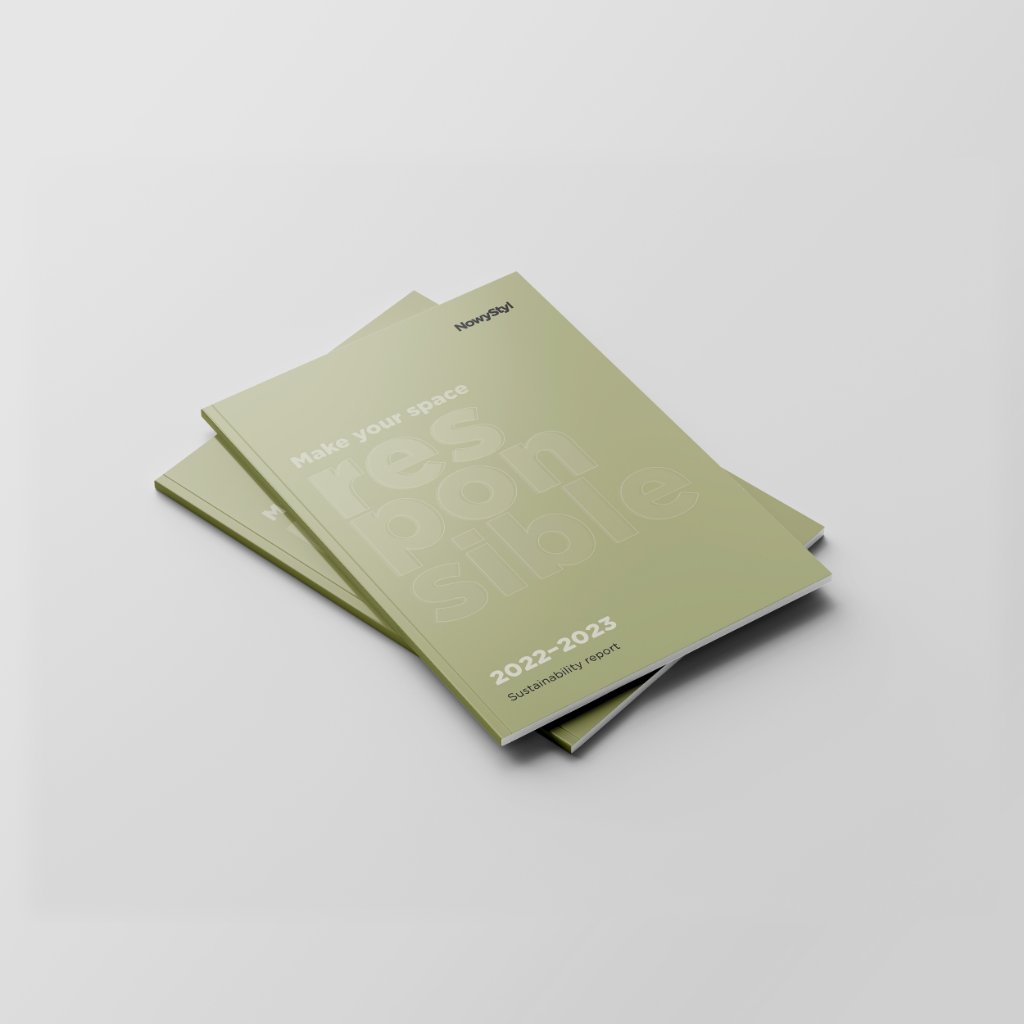
Check out the Nowy Styl Sustainability report that we compiled in line with GRI standards and that was approved by an independent verification body - KPMG Advisory.
As a part of Nowy Styl, Kusch+Co was also subjected to an EcoVadis assessment – Nowy Styl has once again received the highest possible EcoVadis assessment in 2025 – the Platinum Medal.
Nowy Styl has been a signatory to the UN Global Compact since 2012 and actively supports the ten principles of the United Nations Global Compact in the areas of human rights, labor, the environment, and anti-corruption.
Supporting diversity
We have signed the Diversity Charter, an international initiative for promoting equal treatment and diversity at work, coordinated by The Responsible Business Forum. The Charter has signatories in 26 EU countries.
Signing the Diversity Charter means the whole organisation, including its employees, as well as social and business partners, is ready to counteract any discrimination at work, to promote and create diversity. Organisations that decide to implement the programme foster social equality and coherence.
Joining this initiative confirms that diversity and human rights are integral parts of our organisational culture.


 Download